


As electric vehicles continue to grow in popularity, more homeowners and businesses are looking into installing their own charging points. But before choosing a system, it’s important to understand the different EV charger types available.
From home wall boxes to rapid public charging stations, there are several types of EV chargers designed for different vehicles, properties and charging speeds. In this guide, we’ll break down the main EV charger types UK drivers should know about, helping you choose the right solution for your needs.
EV Charger Types by Charging Speed
One of the main ways to categorise EV charger types is by how quickly they can charge your vehicle. Charging speed is measured in kilowatts (kW), and the higher the kW rating, the faster your battery will recharge.
Understanding these electric car charging types will help you decide what’s suitable for your home or business.
Slow Chargers (Up to 3kW)
Slow chargers are typically used with a standard 3‑pin domestic socket. While they don’t require specialist installation, they are the slowest of all types of EV chargers, often taking 12–24 hours to fully charge a vehicle.
They’re generally considered a temporary or backup option rather than a long-term solution. Most EV owners in the UK move away from this EV charging type once they install a dedicated wall-mounted unit.
Fast Chargers (7kW–22kW)
Fast chargers are the most common EV charger types UK homeowners install. A 7kW charger is standard for most domestic properties with a single-phase electricity supply and can typically charge an EV overnight.
Workplaces and commercial sites may install 22kW units where three-phase power is available. These chargers offer a practical balance between speed, cost and installation requirements, making them one of the most popular types of electric vehicle chargers for everyday use.
Rapid and Ultra-Rapid Chargers (50kW+)
Rapid chargers (50kW) and ultra-rapid chargers (100kW+) are usually found at motorway services, retail parks and dedicated charging hubs. These different types of EV charging stations are designed for quick top-ups, often charging a battery to 80% in under an hour.
Due to their high power requirements, they are not typically suitable for domestic installation. Instead, they form part of the wider public charging infrastructure.
EV Charger Types by Location
Another way to understand the different types of EV chargers is by where they are installed. Some are designed specifically for home use, while others are built for commercial premises or public access.
Choosing the right option depends on how and where you plan to charge your vehicle.
Home EV Chargers
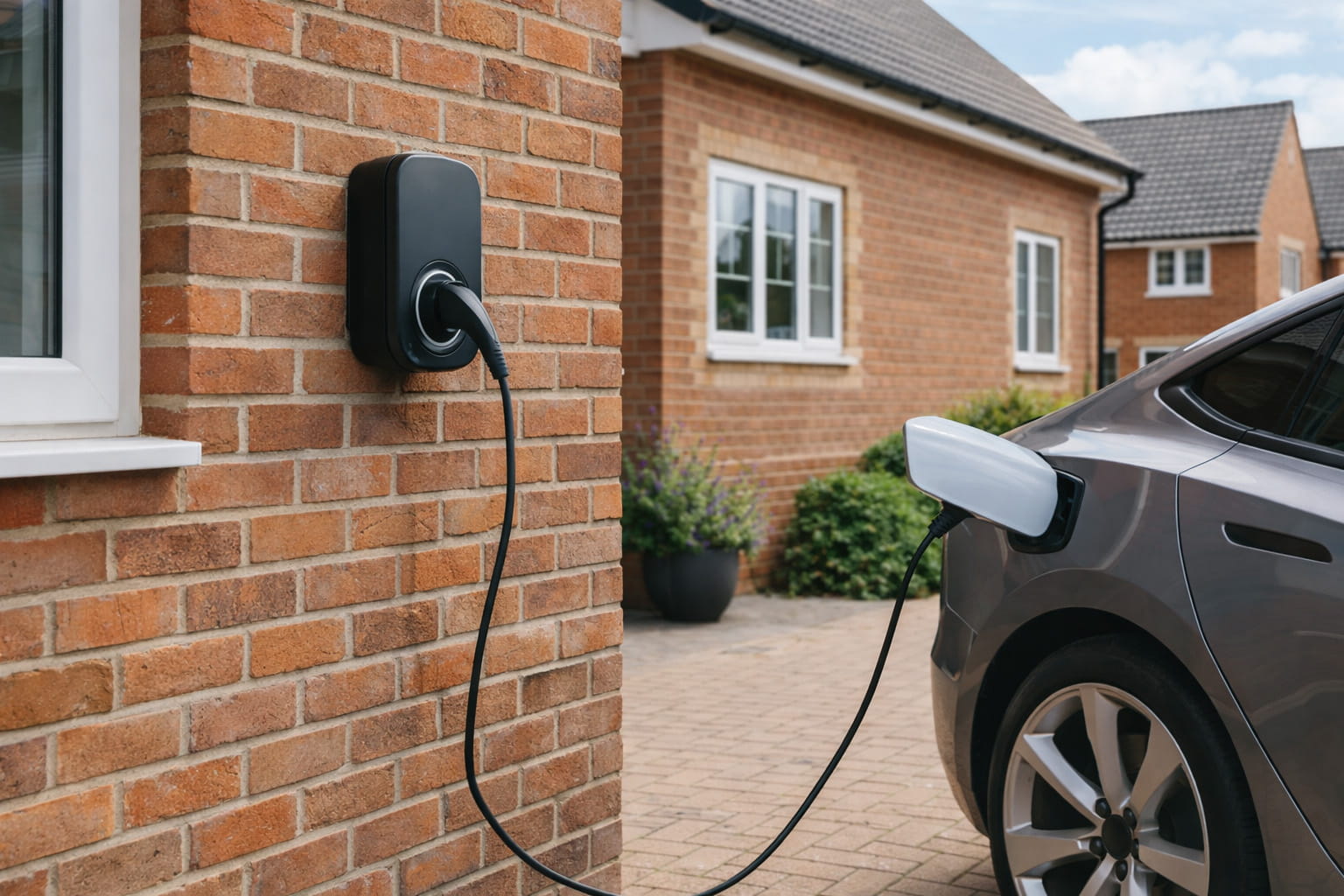
Home charging is the most convenient option for most drivers. These types of electric car chargers are typically wall-mounted 7kW units installed on an external wall or in a garage.
Home chargers allow you to plug in overnight and wake up to a fully charged vehicle. Many modern systems also include smart features, giving you control over charging times and energy usage.
For UK homeowners, this is by far the most common EV charger type, offering a reliable and cost-effective long-term solution.
Workplace and Commercial EV Charging
For businesses, there are specialised types of EV charging stations designed to handle multiple vehicles at once. These systems may include load balancing technology, multiple charging points, and user access controls.
Commercial installations are ideal for fleet vehicles, employee charging, or customer use. As electric vehicles become more common, many organisations are investing in these different types of EV charging stations to future-proof their premises.
Public Charging Stations
Public chargers are found in town centres, supermarkets, car parks and motorway services. These range from fast chargers to ultra-rapid systems designed for short stops.
While convenient for travel, public charging is typically more expensive than home charging. That’s why many drivers choose to install one of the suitable EV charger types UK properties can support, using public infrastructure as a backup.
EV Charger Connector Types (UK)
In addition to charging speed and location, another key difference between electric car charger types is the connector they use. While most modern vehicles in the UK follow common standards, understanding connector types ensures compatibility between your car and charger.
Here are the main types of EV charger connectors you’ll come across.
Type 1 (SAE J1772)
Type 1 connectors are more common in older electric vehicles, particularly early imports from Asia and North America. They use a five‑pin design and support single-phase charging.
While still in use on some vehicles, this EV charger type is becoming less common in the UK as most newer models have moved to Type 2 connections.
Type 2 (Mennekes)
Type 2 is now the standard connector for most EV charger types UK installations. It supports both single-phase and three-phase charging, making it suitable for home and commercial use.
If you’re installing one of the common types of electric vehicle chargers at your property, it will almost certainly be compatible with a Type 2 connector. Most modern EVs sold in the UK use this system.
CCS (Combined Charging System)
CCS is typically used for rapid and ultra-rapid charging. It combines a Type 2 connector with two additional DC power pins, allowing for much faster charging speeds.
You’ll usually find CCS connectors at motorway services and larger types of EV charging stations, rather than at domestic properties.
CHAdeMO
CHAdeMO is another rapid charging connector, primarily found on older Japanese EV models. While still available at some public charging points, it is gradually being phased out in favour of CCS.
Smart EV Chargers vs Standard Chargers
When comparing EV charger types, another important distinction is whether the unit is a standard charger or a smart charger.
In the UK, most new installations are now smart chargers, and for good reason.
What Is a Smart EV Charger?
A smart charger connects to your Wi‑Fi and allows you to control and monitor charging through a mobile app or online portal. These advanced types of EV chargers give you far greater control over how and when your vehicle charges.
Features often include:
- Scheduled charging during off‑peak hours
- Energy usage monitoring
- Load balancing to prevent overloading your supply
- Remote start and stop functionality
Smart functionality has become standard across many EV charger types UK homeowners install today.
Why Smart Charging Matters
With rising energy costs and increased demand on the grid, smart charging helps you charge more efficiently. Scheduling charging overnight can reduce electricity costs, while load balancing ensures your property’s electrical system isn’t overstretched.
For many homes and businesses, choosing a smart unit is the most practical and future‑proof EV charging type available.
Are Standard Chargers Still Available?
Basic or non-smart chargers are less common than they once were. While they still perform the same core function, they lack the monitoring and scheduling features that modern drivers expect.
For most installations, particularly domestic ones, smart models are now the preferred electric car charging types due to convenience, efficiency and compliance with current UK requirements.
Which EV Charger Type Is Right for You?
With several different types of EV chargers available, the right choice depends on your vehicle, your property, and how you plan to use it.
For most UK homeowners, a 7kW smart wall-mounted unit is the most practical option. It offers a good balance of speed, affordability and convenience, making it one of the most popular types of electric car chargers for domestic use.
However, if you run a business, manage fleet vehicles, or expect multiple cars to charge at once, you may need a more advanced solution. Commercial installations often require higher-powered units, multiple charge points, or load balancing systems, all of which fall under specialised types of EV charging stations.
It’s also important to consider your vehicle’s connector type, your available electrical supply (single-phase or three-phase), and whether you want smart charging features.
Choosing between the various EV charger types UK properties can support isn’t always straightforward. That’s why professional advice is invaluable. A qualified installer can assess your electrical system, recommend the most suitable EV charger type, and ensure safe, compliant installation.
EV Charger Installation in Bolton and the North West
Understanding the different EV charger types is the first step, choosing the right installer is just as important.
At Bolton Electrical Services, we provide professional EV charger installation for homes and businesses across Bolton and the North West. Whether you need a domestic wall-mounted unit or a larger commercial solution, we’ll help you select the most suitable option from the available types of EV chargers on the market.
We install high-quality Project EV charging points, known for their reliability, smart functionality and modern design. Suitable for both residential and commercial properties, these systems offer an efficient and user-friendly solution for everyday charging.
As a NICEIC approved contractor, our installations are carried out safely, professionally and in full compliance with UK electrical regulations. From initial advice through to final commissioning, we make the process straightforward, so you can start charging with confidence.
If you’re considering installing an electric car charger, our experienced team is here to help.
Power Your EV the Smart Way
With several ev charger types UK drivers can choose from, including different speeds, connector types and smart features, selecting the right system makes all the difference to convenience and long-term performance.
Whether you’re a homeowner looking for a reliable charging point or a business investing in commercial EV infrastructure, Bolton Electrical Services can recommend and install the right solution for your needs.
Get in touch today to discuss your EV charger installation and take the next step towards convenient, cost-effective electric vehicle charging.
Frequently Asked Questions About EV Charger Types
What are the main EV charger types in the UK?
The main EV charger types UK drivers will encounter are slow (3kW), fast (7kW–22kW), and rapid or ultra‑rapid chargers (50kW+). Most homeowners install a 7kW fast charger, while rapid chargers are typically found at public charging stations and motorway services.
What is the most common type of EV charger for homes?
The most common type of EV charger for domestic properties is a 7kW wall‑mounted smart charger. These types of electric car chargers offer a practical balance between charging speed and affordability, allowing most vehicles to fully charge overnight.
Are all EV chargers compatible with all electric cars?
Not always. Compatibility depends on the connector type and charging capability of your vehicle. In the UK, most modern vehicles use a Type 2 connector for home and workplace charging, while rapid public chargers typically use CCS. Understanding these electric car charger types ensures you choose the right unit for your vehicle.
What are the different types of EV charging stations?
There are several different types of EV charging stations, including home chargers, workplace charging units, and public rapid charging hubs. Each is designed for different usage needs, from convenient overnight charging at home to quick top‑ups while travelling.
Do businesses need different types of EV chargers than homeowners?
Often, yes. Commercial premises may require multiple charging points, load balancing systems, or higher-powered units. These types of EV charging stations are designed to handle increased demand, particularly for fleet vehicles or employee and customer use.
What’s the difference between fast and rapid EV charging types?
Fast chargers (typically 7kW–22kW) are commonly installed at homes and workplaces. Rapid chargers (50kW and above) provide much quicker charging but require significantly more power, meaning they are usually installed in public charging locations rather than residential properties.


